
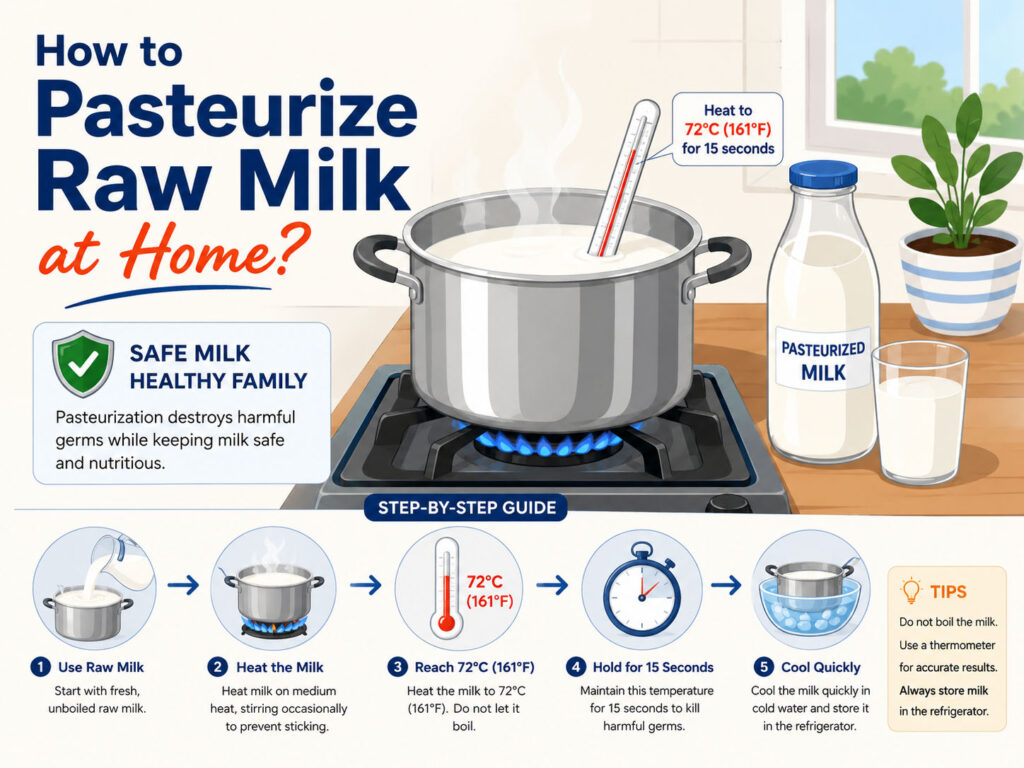
What is Pasteurization?
Pasteurization is a heat-treatment process that destroys pathogenic microorganisms in certain foods and beverages. The name comes from French Microbiologist Louis Pasteur. Louis Pasteur (in the 1860s) demonstrated that abnormal fermentation of wine and beer could be prevented by heating the beverages to about 57°C (135°F) for a few minutes.
The Purpose of Pasteurization:
- To increase milk safety for the consumer: The process destroys the pathogenic microorganisms (disease-causing) that are usually present in milk.
- To increase the keeping quality of milk: The process destroys spoilage microorganisms and enzymes. Enzymes and microorganisms reduce the quality and shelf life of milk. Hence, pasteurization increases the expiry date of milk and milk products.
Common Pasteurized Products:
- Beer
- Canned Foods
- Dairy products (Milk, Yogurt, Cheese, Butter Milk)
- Eggs
- Fruit juices
- Milk
- Nuts
- Syrup
- Vinegar
- Wine
Buy Pasteurized Products From Amazon:
- Pure Monoflora Honey 500 Gm: https://amzn.to/3fbq3zt
- Organic Apple Cider Vinegar 750 ml: https://amzn.to/3ciLmqh
- Amul Gold Milk (Pasteurized), 1L (Pack of 12): https://amzn.to/2MDBpAo
Pasteurization Type
| Temperature | Time | Type |
|---|---|---|
| 63°C (145°F) | 30 minutes | Vat Pasteurization |
| 72°C (161°F)* | 15 seconds | High-temperature Short-time Pasteurization (HTST) |
| 89°C (191°F) | 1.0 second | Higher-Heat Shorter Time (HHST) |
| 90°C (194°F) | 0.5 seconds | Higher-Heat Shorter Time (HHST) |
| 94°C (201°F) | 0.1 seconds | Higher-Heat Shorter Time (HHST) |
| 96°C (204°F) | 0.05 seconds | Higher-Heat Shorter Time (HHST) |
| 100°C (212°F) | 0.01 seconds | Higher-Heat Shorter Time (HHST) |
| 138°C (280°F) | 2.0 seconds | Ultra Pasteurization (UP) |
Does pasteurization change the nutrition value of milk?
As per the CDC, this process does not change the nutritional value of the milk. Only vitamin C doesn’t survive after pasteurization, so most dairy companies add vitamin C to the milk after pasteurization.
If you’re thinking that drinking raw milk is good for health because it is a good source of beneficial bacteria like probiotics, you should know that it could be harmful and make you sick because of Mycobacterium tuberculosis and other heat-resistant, non-spore-forming, disease-causing microorganisms found in milk.